My favorite book about film editing is “In the Blink of an Eye,” by Walter Murch, in which he theorizes about why editing works. I stumbled on this extraordinary 2-part video (40 min each), recorded during a talk he gave in London in 2003. It’s just packed with the kind of thoughtful brilliance that only Walter Murch can deliver. Everyone one of us who aspires to editing film should be so lucky as to have this man’s voice in our heads, quietly reminding us, “your duty is to expect miracles.”
Category Archives: News
Rode Lavalier looks like a winner
I’m packing my bags for filming in the Galapagos Islands in December. That means I’m packing gear that, like the wildlife that Darwin discovered (and I’m looking forward to meeting), is adaptable to fast-changing environments. That’s why I just placed an order for one of these sweet looking mics, due to begin shipping in a week. Paired with my H1, this is the killer combo considering it doesn’t need phantom power. Bonus: the mic comes in a waterproof case. Sold!
I love my job
When you’re an indie filmmaker, you have good days, bad days, and just days. I would call this one of the good days.
I’m currently working on a project featuring James Beard award-winning chef Tiberio Simone, who uses the human body as a playground for his culinary imagination.
Thanks to La Figa Project photographer Matt Freedman for sharing this photo, and to Stella, our beautiful and tireless model.
Miguel Gomes in Seattle tonight for NW Film Forum screening
It’s like the people at NW Film Forum have been reading my mind lately. First, they bring Vincent Moon to town, and he puts on a workshop that blows me away. Now Miguel Gomes is in town for a screening of “Our Beloved Month of August.” I put that film on the top of my “must see” list after reading the Sept. 2 NY Times review of the film, which noted how artfully it plows the rich territory between documentary and fiction. Only, I’m not in New York, where the 2008 film opened earlier this month, and it is nowhere to be found online, so what a delight to find that not only is it playing tonight at NW Film Forum, but the director will also be present. Can’t wait. Here’s the trailer, sans subtitles:
Documentary Blog launches great new podcast
Jay Cheel and Josh Ligairi have launched The Documentary Blog Podcast, and look who’s talking about the blurry line between narrative and documentary! Here’s a link to download the entire episode (62 MB), totally worth watching.
Warren Etheredge Art of the Interview workshop starts Monday
I attended this workshop a year ago, and took my interviewing skills to a whole ‘nother level. Etheredge is a real master who share skills he’s learned from more than 1,500 interviews with cultural figures from Charlie Kaufman to Chuck Palahniuk. This Art of the Interview workshop begins in Seattle on Monday, September 13th at 6pm. Here’s the details from the event page:
“Warren Etheredge is an extraordinary interviewer — one of the best in the country. He’s incredibly prepared for each encounter — and has an uncanny ability to absorb complicated material and distill it for audiences. He also has a terrific sense of humor that makes the interviews feel less like dutiful graduate seminars and more like a late-night talk show. Indeed, I think it’s only a matter of time before some media executive wises up and gives Warren his own show.” — Daniel H. Pink, author of DRIVE and A WHOLE NEW MIND
“Warren is the most knowledgeable and engaging interviewer and commentator on film that I have ever been engaged with. His insight and criticism are tempered with a keen sense of humor and irony. To be the subject of one of his filmmaking classes was both intellectually stimulating and a whole lot of fun.” — James Foley, filmmaker (GLENGARRY GLEN ROSS; AT CLOSE RANGE)
“…I found [our] conversations about 4 times more fun and thought-provoking than any other moderated talks in which I’ve participated.” — David Benioff (screenwriter, THE 25TH HOUR; THE KITE RUNNER; WOLVERINE)
“Warren Etheredge is one of the most probing and thoughtful interviewers–not to mention the wittiest!” —David Grann, author of THE LOST CITY OF Z
Tuition for this intensive workshop is $100. ($75 for graduates of TheFilmSchool’s Summer 2010 session.)
I am always flattered by the (unsolicited!) feedback I receive from the folks I interview. I am thrilled they appreciate the spirit with which I approach interviews. (Owen Schmitt , formerly of The Seattle Seahawks, refers to my style as “chill”… and who am I to argue with the 6’2”, 247 pound fullback?)
Now you can learn how I prepare for interviews and how I respond to the different challenges presented by questioning folks on tape, on camera or before an audience. And, I’ll share insights and a little bit of gossip from the 1,000+ interviews I’ve conducted with the likes of Woody Allen, Amy Sedaris, Calvin Trillin, Naomi Watts, Robert Duvall, Mariel Hemingway, Salman Rushdie, Nora Ephron,Michael Pollan, Charlie Kaufman, Augusten Burrough, Andy Samberg, Vincent Bugliosi, Nicolas Cage and others.
You’ll learn why documentarian Peter Esmonde says: “I was more relaxed being interviewed by you than anyone before or since. It’s so clear that, aside from being attentive and intelligent, you know [your stuff] — and that makes the interview more of a conversation with a compadre.”
The venue for this special intensive will be the Phinney Neighborhood Association (6352 Phinney Ave N, Seattle WA 98103)
Tuition for this exclusive, 3+ hour workshop is only $100. You may mail check or money order (made payable to Warren Etheredge) to: 1752 NW Market St #118, Seattle 98107. Or, pay using PayPal, sending money to warren@thewarrenreport.com
Space is very limited, so please reserve your seat today and indicate you’ll be attending on Facebook.
About me… As founder of The Warren Report (www.thewarrenreport.com), Warren Etheredge — America’s premier cultural conversationalist — curates and hosts over 200 events every year, a podcast and television series. The Warren Report promotes “slow culture” through commentary, outreach, events and education. He is the host of The High Bar, a television series that airs weekly on SCANtv. Warren has conducted over 1,500 interviews — in print, on camera, on stage — with a wide range of filmmakers, personalities and smarties including Amy Sedaris, Darren Aronofsky, Michael Pollan, Charlie Kaufman, Naomi Watts, Salman Rushdie, Robert Duvall, Alexander Payne, Nora Ephron, Augusten Burroughs and Chuck Palahniuk. Additionally, Warren is one of the founding faculty of TheFilmSchool, along with Tom Skerritt, Stewart Stern, Rick Stevenson and John Jacobsen. For six years, Warren served as the Curator for the 1 Reel Film Festival (at Bumbershoot), before that, he worked with the Seattle International Film Festival. Warren has staged over 40 plays in New York, published five books, written countless magazine articles and recently completed a feature-length documentary, HUMOR ME. He is the host of Words & Wine, The Good Life and the Biznik Innovators Series, conversation series with A-list authors, and is a regular contributor to Seattle’s premiere public radio station, KUOW. He speaks at festivals and conferences nationwide including The Screenwriting Expo, The NAMAC Conference, The International Food Bloggers Conference, The Austin Film Festival and Conference and Bastyr University’s Founders Weekend.
Freakonomics defined: cut out middleman; charge same price; pocket the difference
When I heard that Freakonomics was going to be released online a month before its release in theaters, I was delighted. This, I gathered, was the shape of things to come. A film by some of my favorite filmmakers coming straight to my living room. Cut out the middleman, woo hoo!
So imagine my surprise when I sat down this evening to watch the film on iTunes, and discovered that the price to rent the film is $10.99 for HD, or $9.99 for standard def. That’s the same price I pay when I drive to my local movie theater. Hmmm. Apparently Apple and Freakonomics are showing us the future of film distribution. And here’s how it works: cut out the middleman, charge the same price, and pocket the difference. Cha ching. They don’t call it Freakonomics for nothing, folks.
But me? I’m not buying it. I’d rather give my money to the middleman than get shaken down like this. Besides, paying that money to my neighborhood theater will at least benefit the local economy more than paying it to Apple will, now that they’ve blown past Microsoft in valuation. I’ll sit out this revolution until I have a better sense that it’s one I want to be part of.
Freakonomics opens on a small screen near you Sept. 3
The most exciting thing is happening in film distribution: films are beginning to break free from theaters. Case in point: Freakonomics, a film based on the book by Steven Levitt and Stephen Dunbar. The film gets its premier on Sept. 3 not in theaters, but on iTunes. Theater goers will have to wait until Oct. 1st to catch the film. One of my favorite documentary directors, Morgan Spurlock, is among the 6 filmmakers who each contributed a chapter to the film, and I’m looking forward to finding out whether a film made this way is more – or less – than the sum of its parts.
The whole notion of releasing a film on a few thousand big screens – and withholding it from millions of other screens until it’s completed it’s run – is ridiculous for most films. Most films aren’t destined to be blockbusters, but they DO have niche appeal. And what better way to reach a niche than directly, online? Craiglist proved that for classified advertising a long time ago. And the same thing will ultimately prove out for movies.
Mark Lipsky, who spent many years in the film industry and recently relocated to Seattle, makes a compelling case that movie theaters will be dead in 10 years. As a filmmaker and as a film goer, I’m looking forward to that day, not because I hate theaters, but because I love movies.
Montessori School Video: A Guide on the Side
Today I’m happy to launch the second in a four-part series of videos I’ve been commissioned to make by Eton School. This one features pre-school students at the Bellevue, WA Montessori school paired with the voices of their parents.
The first video in this series featured teachers speaking, cut with upper level students. There was almost no nat sound in the 3-minute piece, just a few effects, and a breathtaking music track from VNV Nation (which we used with permission thanks to band cofounder Ronan Harris).
I approached making this video slightly differently. First off, it’s just one minute long. Instead of teachers, parents’ voices provide the spine of the piece. Also I have incorporated a fair bit of natural sound. The kids do get one speaking part – the word “oops!” For the music, happily I didn’t need to license anything this time either – I found this great track among the hundreds that Apple includes with Soundtrack Pro, which really is worth the purchase price just for the royalty-free sound effects and music tracks. It was too long so I sliced it in two in SoundTrack Pro and beat-matched the two segments, resulting in a piece of the perfect length right down to the frame. Bet you can’t spot the cut point!
Most of the footage was shot with my T2i; a little was shot on my JVC HM100. It’s color corrected with Final Cut’s Color Corrector 3-Way and heavily graded in Magic Bullet Looks, where I wanted to create a warm, fuzzy vibe. The heavy grading also made it easier to combine footage from the two cameras.
All the footage and interviews for the remaining videos on this project is in the can. I’m currently editing the next video in this series, which showcases the school’s lower level students. It should be up in about a week.
I’m also currently in post on another outstanding school video (the school is outstanding, at least, and I hope the video will be) for the University of Washington’s Experimental Education Unit. Look for that one sometime in September.
Oh, want a video like this for YOUR school? Drop me an email to dan at danmccomb dot com. I love this stuff and it’s how I support my documentary film habit.
Vincent Moon: I make films for the small screen
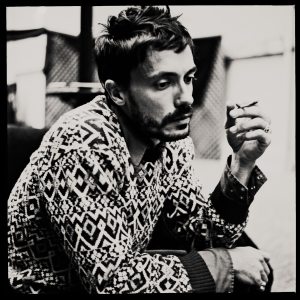
As Vincent Moon walks into the small theater at Northwest Film Forum, he looks nervous. About a dozen fans and local filmmakers have signed up for a 3-hour workshop with this frail-looking Frenchman, and I’m one of them. Between bagel bites and coffee sips, he begins rambling about his disdain for film school (even though he taught at one recently and even attended one for a few years himself). After he drops the third or fourth name of a director I’ve never heard of, I begin to wonder whether the class was worth my time.
Then he shows this film. It’s short, under 10 minutes. Much of it is blurry and out of focus, and the jittery handheld camera work screams “amateur.” But I begin to pay closer attention as I see that the film was made in a single take. Climbing into the back of a pickup truck with a group of musicians in Argentina, Moon had filmed handheld as they drove through the streets. That’s right, shooting handheld from a vehicle, zooming in for tight shots of faces, disdaining the most basic rules of photography (keep the camera steady; keep the subject in focus, etc). Crazy!
But his camera is definitely on an intelligent quest. It reacts to what it discovers spontaneously. When the camera catches a blur of a couple looking up as the truck passes, it follows them until they disappear, then lifts to peer up at the anonymous windows rushing by, before returning in an arc to the musicians. A parked police car slides by, sun glints off the singer’s dark glasses, and he zooms into them as they drive into a dark street. The scene fades naturally to black, and I realize I’m on the verge of tears. Huh? How did THAT happen? Who is this guy?
Apparently the coffee is working, because Moon is looking a lot more comfortable now, and smiling. “What you think of dat one?” he says, in his heavy French accent. “Zat OK?” A kid with a DSLR camera over his shoulder raises his hand and says, “I want to know everything: what kind of camera did you use, how exactly were you holding it, what your settings were on the camera, what software did you use for color correcting, everything.” Moon laughs politely and wiggles away from the question by pointing out that his work is really an effort to get away from the technical tyranny that pervades so much of filmmaking. In fact, it was the simplicity of still photography that at first lured him into making pictures.
If there’s one thing I’ve come to understand and resent about filmmaking, it’s that making almost anything worth making seems to require conceiving, funding, building, and commanding a small army. The biggest difference between making a film and making a photograph is that the the former is proactive, and the latter is reactive. Filmmakers are always planning and collaborating and organizing, while photographers dance with the moment. It’s a critical difference.
Moon set out to make films the way a photographer takes pictures: often in a single take, often with just himself, sans crew. “I never know what I’m going to do,” he says. “I can adapt myself because I don’t have a plan.” His method: travel to some exotic location for two weeks. Spend the first week hanging out in bars talking to locals and figuring out who the best local musicians are; spend the second week meeting them and filming them; and you’re done.
Well note quite done. The heaviest work for most indie filmmakers isn’t making the film – it’s finding an audience. But Moon shrugs that part off. “I don’t care about people watching. I care about people making [films].” The 20th Century, he explains, was characterized by a separation from artists and society that reached it’s peak in the massive success of bands like The Beatles. You were either in the band (cashing the checks), or in the audience (buying the records). But with the rise of Internet comes the rise of the amateur. Incredibly talented artists can increasingly be found everywhere, doing it for the love of doing it. And he sees his own work as part of that trend. “I make films for the small screen,” he says. But in a world with more than 40 million iPhones, does size matter in the same way it used to?
But most photographers and filmmakers I know apparently haven’t gotten the memo about the death of the audience. They still care passionately about building the largest audience possible on the biggest screen available. And they definitely want to get paid for their work. Moon, in stark contrast, posts most of his work to the internet under a Creative Commons license, which allows other artists to share, remix and reuse his work (provided they are not making money from it.)
So how does he make a living? Well, at least one major band, REM, has hired him to make a music video to the tune of $150,000. But Moon seems embarrassed to admit that, and says wasn’t his best work. In fact, Moon’s most steady form of income these days, he says, comes from speaking engagements like this one. Moon, it seems, is proceeding to make films from the sheer love of making films, following the same artistic impulse as his subjects, and believing the rest will work out somehow.
“I make films to remember,” he says.
Northwest Film Forum will be showing Vincent Moon’s films every evening at 8pm Saturday through Thursday.
