Category Archives: News

News from my personal and professional life.

Seth Godin's advice to filmmakers: ship, fail, repeat

Tim Burton's failed projects

Seth Godin is a marketing guru. I began following his blog when I was looking around for inspiration on how to promote my previous business, Biznik. I’ve continued reading him as I’ve moved on to filmmaking. And I find his advice just as relevant for filmmakers as it is for entrepreneurs. Of course, it’s the same thing.

When I was at MOMA last week, I saw a list of director and artist Tim Burton’s projects. Here’s the guy who’s responsible for some of the most breathtaking movies of his generation, and the real surprise is this: almost every year over the last thirty, he worked on one or more exciting projects that were never green lighted and produced. Every year, he spent an enormous amount of time on failed projects. Read full post.

Panasonic set to make first integrated 3d HD camcorder

I’m intrigued by how the rapid pace of technological change is affecting documentary filmmaking. One safe prediction: we’re going to see more 3d documentary filmmaking in the near future. The overwhelming success of 3d Avatar shows what can happen when you dazzle audiences with the pure visual magic that 3d can provide.

Now, thanks to a new 3D video camera from Panasonic, it looks like 3d filmmaking could become an option for documentary filmmakers. The specs on this camera are pretty impressive, right down to the fact that they record onto standard SDHC cards, which I’m a huge fan of (I HATE how most every major camera manufacturer has it’s own proprietary solid-state card type, and applaud the move that Panasonic seems to be making to support the inexpensive SDHC standard).

This camera is estimated to begin shipping this fall at a price of approximately $21,000. The price will put this camera outside the range of most documentary shooters, but within the reach of someone dedicated to pushing the boundaries of what technology makes possible. Projects that involve extraordinary visuals – imagine Winged Migration if it had been shot in 3d – would be a natural fit. But I’m intrigued by something else: what emotional impact would an interview shot Errol Morris-style looking straight into the lens(es), look like in 3d? Could be pretty powerful stuff.

Red Scarlet prototype demo

Ted Schilowitz from Red shows off the latest version of the camera a lot of indie filmmakers have been waiting for. And more waiting is the keyword: it was supposed to be out last year; now it’s slated for “spring or summer.” The model shown here is a non-functioning prototype.

It looks like an amazing camera, for sure. And at a price-to-quality ratio never before seen in the industry. This is a high production value camera for making films aimed at viewing on the big screen.

But for documentary shooters like me, for whom story generally trumps production value, I’m not sure it’s where I’d put my money (although I might change my mind after I get my hands on one). I also seriously question the workflow, which sounds really cumbersome compared to my drag-and-drop JVC HM-100 to Final Cut workflow. Of course, from a quality standpoint the quarter inch sensors of my JVC don’t even begin to compare with the 2/3″ first-generation Scarlet sensors. On the other hand, the Scarlet doesn’t compare with the Canon 5d MKII’s full 35mm sensor.

As much fun as it is to peek behind the curtain at what Red is developing, I question their logic in hyping the camera months, or in this case, years, before it’s even finished being designed, much less available for sale. I prefer the kind of frustration Apple dishes up – never knowing what’s coming until the rabbit comes out of the hat, and I can place my order the same day.

Enron: The Smartest Guys in the Room | documentary 11 of 100

Alex Gibney has quite a pedigree as a filmmaker. He’s been producing or making documentaries since he graduated from Yale. Enron: The Smartest Guys in the Room (2005) was his 8th film or TV series, proving that you don’t have to be an overnight success to be a success. Enron was nominated for an Oscar, and in 2007, Gibney actually won an Oscar with Taxi to the Dark Side (a film I’ll be screening soon).

This film uses lots of news footage to cobble together a difficult, complex story. I doubt I could ever make a film involving this much research – I don’t have the patience for it. They use documents that were probably entered into courtroom cases as evidence, panning through the document Ken Burns style to help explain how Enron went from being the darling of Wall Street to one of the biggest cases of corporate fraud in history.

Simple but creative use of visuals reinforce what the narrator is talking about (yes, of course there is a narrator in this film – how else would you tell such a complex story? I’d love to know, because maybe I’d have liked the film more if they’d found it). For example, there are cutaway shots of paper being shredded while we hear voiceover about how Enron shredded paper. There’s even a cutaway to a Simpsons cartoon that helps explain things (something Al Gore does in An Inconvenient Truth).

I like the use of music to reinforce and subtly make points in this film. Immediately after a historical clip of Ronald Reagan describing the “magic of the marketplace,” we hear “That Old Black Magic” which is a very effective way to subtly call bullshit on Reagan. “Son of a Preacher Man” is a great choice for the background music while narrator introduces us to Enron wonderkid Jeffrey Skilling. The editing is straightforward: begin the sequence with the music at full volume, fade it down to background so we can hear narrator, and keep it playing until the sequence is complete – then just fade it away.

Structurally, this is a straightforward, traditional doc, with heavy use of historical footage, narration, still photos, cutaway shots and b-roll, all supported by interviews with experts and participants, who are all looking slightly off camera. It’s a time-tested formula, so I award no points for inventiveness in how the film is structured.

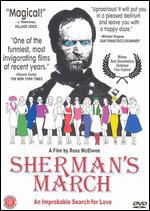
Sherman's March | documentary 10 of 100

I love Sherman’s March. There’s so much to take away from this film, I hardly know where to start. So I’ll start at the beginning: with filmmaker Ross McElwee misdirecting me into thinking that this is really a film about Sherman’s scorched-earth march across the South near the end of the Civil War, complete with stentorian hired-voice narration while arrows depicting the march show us the route on a map. Psyche!

Cut to empty Manhattan flat, with McElwee narrating. His girlfriend, he tells us, has just dumped him, triggering an existential crises in his life. He’d just received $9,000 to make a film about Sherman’s March (a decent chunk of change in 1981, when he did the filming). McElwee resolves to make SOME kind of film as therapy, and we’re off on a nearly 3-hour ride that loosely follows Sherman’s march route through the South, but very closely follows McElwee’s quest to find a new girl.

This is an intensely personal film. In fact, I discovered there’s a special genre of documentary in which this film resides called, appropriately enough, “personal documentary.” The filmmaker adopts a “lovable loser” role describing with deadpan humor his luckless encounters with women, many of whom are past girlfriends whom he visits while on his trip through the south. A journey is a powerful metaphor, and so is the figure of William Tecumseh Sherman, with whom McElwee identifies as someone who was mostly ignored or despised during his own day.

What I admire about this film is the ability that McElwee showed to make his OWN film. The historical Sherman’s March simply provides a structural support for the film, the canvas if you will, on which the artist paints. I saw another film recently that attempted a similar approach: An American Journey, in which journalist-turned-filmmaker Philippe Séclier retraced the steps of photographer Robert Frank. However, Séclier doesn’t manage to make the journey his own anywhere near as convincingly as McElwee does. And that’s the takeaway for me from this film: to make really good films, they must be films that only you YOU could make.

Intriguingly, I don’t think this film would have worked had it purported to be a film about a guy going in search of a girlfriend in his native South. That’s too obvious. It needs the twist, it needs to misdirect us a little bit, in order for us to see it’s genius. Our minds crave seeing beyond the obvious.

Random observations: The filmmaker maintains a deadpan narrative delivery throughout, which is funny. The humor helps the film work. He also keeps the camera rolling through a lot of delicate conversations and first meetings, which must have required a lot of negotiation. He uses a simple convention three times during the film: a shot of the moon (in different phases for each of the scenes) with his voiceover describing his dreams. Very effective bridge technique between sequences. In a way the film is a celebration of Southern women. We really get a glimpse into their character.

I love how he enters the film saying “I have no idea what to film next.” You really almost feel sorry for him at that point, you identify with him. And you want to keep watching to find out what he DOES find to film.

Beautiful shot: when he finally gets the MG running, you know he’s got it running when you see the reflection of the car in the stainless steel gasoline tanker, which is a reveal shot – you have no idea what it is at first. He managed to shoot it while driving. Kids, don’t try this at home.

Ultimately he does get a nice cross section of southern life, everything from the nut jobs at the survivalist enclave, to the women’s rights activist who keeps going back to a boyfriend who appears to be no good for her.

Tip: If you screw up and forget to record sound, as McElwee did on two occasions in the film, just admit it and narrate over the visuals! This technique allowed him to cover his mistakes and helps build the case that he’s a lovable loser.

He films himself walking around the battlefields looking a little lost. Nice bridge scenes. Also a sweet camera move when he films the big plastic rhinoceros, in which he starts out walking backwards in front of the guys who are carrying the rhino, then stands to one side and lets it pass away and travel into the scene. Simple camera move but nice one that tells story and is nice to look at.

He provokes a confrontation scene by following Burt Reynolds into the place where he’s making a film. Reynold’s henchmen see him right away and he films them for a few seconds while they confront him, which cuts straight to a police officer writing down his name. Yes, he keeps the camera rolling. Remember that.

I was really curious how he’d end this film. Does he find a girl? He finds a way to tie it together that feels honest and hopeful.

This film was full of lessons for me. And it turns out that McElwee went on to become a professor at Harvard University, where he teaches – surprise – filmmaking.

An Inconvenient Truth | documentary 9 of 100

The way this film was shot breaks a lot of “rules.” Basically, it’s a Power Point presentation. But a really, really good one. Plus, the fact that the man making the film was the winner of the popular vote to become president in 2000. But we all know what happened there. Al Gore is a tragic figure who, with this film,  finds something he can be really really good at: telling the devastating truth about global warming. Gore makes an absolutely compelling case that global warming is an impending global disaster.

The film opens with a series of nature shots, which I think were filmed on or near Gore’s family farm. Voiceover of Gore talking about his goals and what he’s failed to achieve in life. Beautiful and simple transitions use classic technique of person in moving vehicle to project a sense of forward motion with a disolve from car moving directly into tracking shot from airplane of glacier cuts to single point of ice with water melting under it to tie it all together and tell us what this film is about. In particular I like the way Davis Guggenheim shot Gore through the window of the car – he apparently leaned out of the front passenger seat and shot Gore through the reflections in the class of the passenger window, so that you can catch glimpses of him. Nice way to create dramatic visual in otherwise boring visual situation.

The film is structured simply: introduction with Gore talking about himself and providing a glimpse of the problem, and we see him preparing power point slides at his home, and in hotel rooms. Then we get straight into the presentation, which is filmed with high production values complete with complex crane moves sweeping over the crowd up toward Gore and his slides.

Then after Gore makes a particularly powerful point, we cut to a quiet interlude. More traveling. We get that Gore is really dedicated to the cause of spreading his message to the entire world. There’s a great moment where he says “Is it possible there are other threats we need to address besides terrorism?”

A lot of the footage is slightly shaky – in the car, also Gore at his farm looks shoulder shot. Adds to the feeling of believability. Lots of very slow zooms or dolly moves when Gore is giving the presentations makes them come alive more. On the many still photos of Gore’s family members, we get the Ken Burns effect: slow pans and zooms into the pictures. Great Upton Sinclair quote: “It’s difficult to get a man to understand something if his salary depends on his not understanding it.”

There’s one beautiful shot that I’m guessing was made with a stabilizer of some kind, like a Steadicam Merlin, when Gore gets out of his car and the camera crosses in front of him. That’s a shot I want to use sometime and I recently purchased a Merlin, which I’m practicing with (because it’s not simple to get good results with it).

Gore talks VERY slowly and deliberately throughout the film. It’s a very effective way to get people to listen: slow down. Deliver clearly. A takeaway is that you can tell your subjects to slow down in interviews sometimes if you want what they are saying to have more impact.

Simple but very well crafted and ANIMATED graphics throughout film (presumably provided by Gore’s power-point designers) provide visuals for the film. The fact that they are animated makes them very effective. Map lights up while he talks about cities he’s traveled to. Nice music interludes with electronic riffs provide background for the transition sequences.

This is a devastating film. You can’t watch it without feeling in your core that the planet is fucked unless we change course radically and fast. Gore addresses the skeptics and preempts some criticism by addressing skeptics questions directly and then debunking them. The film doesn’t try to do what journalists do – get the “other side” of the story, which is really a cop out. Gore shows in one slide the number of journalistic articles that provide “balanced” coverage by quoting someone from the “other side” but then shows that among scientists, the numbers are an avalanche with literally just a tiny handful of scientists who dispute the finding that global warming is a real and present danger to our way of life and survival as a species.

But the film concludes hopefully with a great quote: “In America, political will is a renewable resource.” And neatly provides a place you can go to act: climatecrisis.net. The film credits are intermixed with steps you can take to help. So that as a whole, the film is a stirring call to action. This film is, in my opinion, an example of absolutely brilliant documentary filmmaking: it shows a strong point of view that is based on facts, without taking the easy path that so much so-called “balanced” reportage does when they include “the other side.” Filmmakers are free to look at the facts and make up their own mind, then share that with the world in the form of a compelling film worth watching. Which is why I love this medium so much.

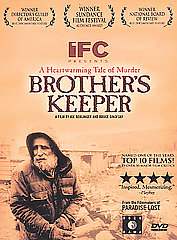
Brother's Keeper | Documentary 8 of 100

I became an instant Joe Berlinger fan about 10 minutes into watching his most recent film, Crude, which screened last fall for a week at the Varsity in Seattle. After watching that as-it-happens legal drama, which pitted native people in Ecuador against Chevron, I want to see everything this documentary filmmaker has ever done. First top: Brother’s Keeper, his first feature length documentary (which he co-directed with Bruce Sinofsky).

Crude was about a courtroom battle (with most of the action filmed outside of the courtroom) and so is Brother’s Keeper. But in both films, there’s not much tedious back-and-forth argument between attorneys in a courtroom. From a filmmaking perspective, what I found remarkable about Brother’s Keeper was the fact that the story builds like a Hollywood thriller toward a climax in the courtroom. Berlinger takes us into the lives of the defendant, a man accused of murdering his brother.

The film is classic verite. That makes sense given Sinofsky’s background – he worked as an editor for the verite pioneering Maysles brothers in New York before partnering with Berlinger in 1991 to create his own production company, Creative Thinking International. But what most impresses me the way Sinofsky and Berlinger put this film together is the care they must have taken in selecting which story to tell. All of the classic elements were there – this story was a major media event at the time, because it involved accusation of assisted suicide as well as murder, and the entire local community supported the accused. All the juicy elements of conflict were in place, so it really didn’t matter how the case went in court – it was going to be a good film no matter what. And that’s my big takeaway from this film: pick stories where the conflict is so great that people will stay on the train until it reaches its destination without getting off early.

The film appears to have been shot mostly from a shoulder mounted camera, which was on sticks a lot. There’s brief but frequent music use that helps creating a feeling for the place where the drama happens – down-home violin music which feels like a barn yard. I noticed also that they lit many of the interior scenes with one or two hot lights, in such a way that the lighting doesn’t call attention to itself.

You can hear the voice of the filmmakers frequently, asking the questions and interacting with the brothers. That works very well as an approach here, and something I’m tempted to try out myself. But the filmmakers do not enter the frame (although Berlinger at one point almost entered the frame and you can hear him protesting that he doesn’t want to “be in the film.”) Camera movement doesn’t call attention to the techniques being used – that is, no dolly moves or anything like that.

The way the film is structured, with pauses between the interview segments to show b-roll of the farm with ominous music chords works very well, before we go back to next interview. And we hear depositions from lawyers and prosecutors but we don’t SEE them until much later in the film, a very effective technique. This is a technique I’m going to use a LOT in my films because more than any single technique, showing one thing while hearing something else is a very powerful way to hold viewer’s attention and add a third layer of meaning to what’s being shown AND what’s being said. The sum is greater than the parts when this is done well.

Another interesting observation: they don’t ID the people portrayed, they just show them, and you have to guess who the person is based on the clues they provide and the context. This helps make it feel more like a narrative film, and less like a documentary, and I like it. Another thing that adds visual interest: virtually all of the people included in the film are OLD. Really old. And they look really interesting with the texture of their faces and the way they talk.

Traveling shots with brothers riding on tractor create a sense of the film being pulled forward and helps get us from one interview to the next. Part of the fun is the long sequences in which we hear filmmakers asking questions and hear the answers aparently without cuts, so it feels very real and immediate and trustworthy. Joe asks obvious and human questions, like “Didn’t you have a girlfriend? Why not?” One very important observation: the filmmakers do NOT stammer or have to restate their questions – they just ask them, simply and directly. They are good conversationalists with a lot of clarity in their speech. They ask a lot of simple, probing questions, such as “Why” and “Why not?”

The farmers do answer frequently in simple “yes” and “no” style, which normally doesn’t work for an interview, but which helps establish them as simple, salt-of-the-earth people, and partly explains why the filmmakers included themselves – because the simple answers need the voice of filmmaker for context to the question.

Great use of signs to establish where the action is happening – sign of state police before we find outselves in an interview with a police officer tells us that we are inside that building for the interview. We see the farmers continuing their simple life while the courtroom drama unfolds on the sound track. Nice cuts of people getting into car and driving away as a transition.

Finally, the climax of the film happens when the case goes to trial. The camera is allowed in the courtroom, and after the jury deliberates, they reach a verdict and we are on the edge of our seats as is every single person in the courtroom to see the result, which is the stuff of classic story climax. After that, the film wraps up very quickly – we see the main characters congratulated by members of the community, and the main character says “it feels like I’m going to start over again,” gets on a tractor, and rides off into the rest of his life. Nice way to tie it up.

The War Tapes | documentary 5 of 100

Seattle documentary filmmaker Nassim Assefi brought over a Netflix dvd of The War Tapes a couple nights ago. Watching this film so quickly after watching Iraq in Fragments was an interesting juxtaposition. This is a very different take on the Iraq war: the world as seen through cameras given to National Guard soldiers deployed to Iraq by filmmaker Deborah Scranton and her team, which included Hoop Dreams director Steve James, who was producer/editor on this film.

I’m guessing the editor had the toughest job on this film, as the bulk of the film was cobbled together from footage that was sent home to the filmmakers by the soliders. I guess that’s what some people would call innovative filmmaking. This film certainly tells a fully developed story that probably couldn’t have been told any other way. But compared with the work that James Longly produced at the same time in the same place, I’m tempted to call it inferior filmmaking. The difference, of course, is that James was there, actually making the film himself, while the War Tapes filmmakers were at home, reviewing footage produced by soldiers. It’s a very different approach, with very different results.

The filmmakers do actually make a bit of film themselves, though, beginning with the soldiers themselves before they are deployed to Iraq, and also following them after their return long enough to find out that they have (surprise surprise) been changed by their experiences.

The point of view of this film seems to be “soldiers are people, too.” Or maybe, “soldiers are victims of this war as much as anyone else.” But I found the soldiers to be pretty unsavory characters who made bizarre choices in life. After the inevitable horrors they encounter (seeing an Iraqi girl run over by a convoy they were protecting, killing iraqis and generally being afraid for their lives the whole time they were there) they come home and half of them end up quickly diagnosed with post traumatic stress disorder. But my feeling after watching this film is that these guys were not victims of Bush’s war machine as much as they were willing accomplices.

From a filmmaking perspective, this film proves that it’s absolutely possible to make a compelling, highly engaging film using the work of amateurs, provided you’ve got a dedicated team of talented filmmakers managing the process from beginning to end. This film is sort of a natural extension of the basic idea behind Born Into Brothels – giving cameras to kids. No doubt we’ll see more of this kind of filmmaking as good quality, inexpensive video cameras become as ubiquitous as cellphones.

Rivers and Tides | documentary 4 of 100

If there’s one thing I’ve learned about art after 7 years of going to Burning Man, it’s that the process of creating art is far more interesting than the product that gets created. To say this another way: going to a museum to look at art is a little like going to a zoo to look at animals.

In Rivers and Tides, Thomas Riedelsheimer shows us art in the wild. Literally. Scottish artist Andy Goldsworthy creates sculptures from objects he finds in their natural environment – everything from chunks of ice to stones to tree branches. And the results are absolutely striking to look at – for a little while. Until the tide covers it. Until it melts. Or until it collapses from the weight of one too many stones.

The cinematography in this film is as beautiful as the art itself. It’s like Reidelsheimer is undressing the art with his camera. He makes frequent use of a crane to glide into, over and around the art. Much of the film was made in rugged outdoor conditions – for example, the middle of frosty fields and muddy rivers. So packing a crane around can’t have been easy.

I’ve never seen a crane in action, but watching the slow, fluid movements a crane makes possible makes we want to try it. I did some Googling and found that you can buy a decent camera crane for around $1,500. But then you should probably add a field monitor, and a way to control the focus and on and on. Plus you’d have to assemble the thing, take it down after after every shoot, etc. It’s a commitment.

Filmmaker takeaway: You can bring a subject to life by approaching it with your camera like a patient lover.

Iraq in Fragments | documentary 3 of 100

What’s incredible about this Oscar-nominated film is that it appears to have been made almost singlehandedly by a lone white guy, James Longly. He was born in Eugene, Oregon, but apparently hasn’t spent much time there over the past several years. Instead, he’s been living in places like Iraq (where he spent 2 years making this film); Iran (where he was arrested during the election last year), and he’s currently doing more of the same in Pakistan.

The first thing that struck me, as a filmmaker, about this extraordinary film is the way the opening sequence was shot – in fragments – by simply pointing the camera out of a vehicle traveling down the street with a fast shutter speed of maybe 250/second, which gives you a stuttering sequence of still frames strung together. It’s a technique popularized by Hollywood films like Saving Private Ryan and Traffic, and it works extremely well here to show that we’re entering a chaotic world.

There’s a shot early on in the film that I won’t forget for a long time: a sketchy street seen through a fish tank in which a pair of breathtakingly orange goldfish are floating. The contrast is unbelievable. It’s just an incredible shot that, if you got it, it has to go in the film. Reminded me that no matter where you are, keep your eyes open for things that don’t to fit within the paradigm of  everything else you’re keying on.

The most significant filmmaker take-away from this film is that it’s possible to include interviews in your film without including interviews. I’ll explain. In the first two-thirds of the film, at no point does the voice of the person being interviewed match with an interview happening on screen. Yet, we’re often seeing the person who is talking – only in different (but frequently related) situations. For example, the first person we get to know in the film is a young boy, who works for an abusive boss at a small car and motorbike repair shop. We hear the boy’s voice for a long time before we actually meet the boy, and when we meet him, it’s not in an interview context. He’s essentially giving us a voice-driven commentary about how awful his boss is, while at the same time we’re actually seeing how awful his boss is.

This is an extremely effective way to include interviews without forcing the audience to sit through predictable visuals. They are actually seeing what happens next at the same time as hearing what they need to hear to flesh out the story details. It’s brilliant. It’s a seamless combination of cinema verite with traditional documentary storytelling, and in this film at least, it’s effect is spellbinding. It doesn’t hurt that the kid is mostly silent through these ordeals, so there’s room for us to hear him explaining things. But the technique also works pretty well in part 2 of the film, when Longly manages to get himself embedded with Muqtada al Sadr’s militia during a tense period when most US journalists were getting embedded with US troops.

Random filmmaker observations:

I really liked the time-speeded sequence of the train leaving southern Iraq and then we lurch into fast motion, the perspective switches from looking backward to looking forward, and we zip across the country in a few seconds into northern Iraq, where Longly hooks up with a Kurdish family. I just found a speed manipulation tutorial on Ken Stone’s Final Cut site that explains in detail, complete with project files, how to do this effect in Final Cut Pro 7.

Longly used a Panasonic DVX 100 while making this film, the standard-definition precursor to the Panasonic HVX 200 (which we used to shoot virtually all of Shine). The highlights are frequently blown out, and it lacks HD clarity, and there’s a lot of mic handling noise during some of the militia scenes. But none of that matters a bit, because the story is so damn compelling. The film is a solid reminder that the story and the person behind the camera is always more important than the equipment.

I found myself wondering if Longly used a Glidecam or something like a Steadicam Merlin for some of his traveling shots. They weren’t rock steady, but they were smoother than I could have hand held.

There are a lot of very briefly held, beautiful, almost still shots edited in liberally throughout the film. It reminded me that you don’t have to always be thinking in terms of sequence – just shoot something pretty even if it’s a couple seconds – you can find a place for it in editing. Also, he uses whip pans really effectively  as a transition at once point, panning quickly away from a child’s face and holding the blurry transition until dropping in the next clip. Whip-panning off someone’s face is a dramatic and powerful way to initiate a transition, and you don’t have to come to a sudden and precise stop on something else within the camera for it to be extremely useable in editing.

I really liked the brief time-disolve of the school teacher herding students down the hall. It’s a great way to convey time passing slowly for the child throughout the school day. And you don’t have to do a lot of these to call attention to them – I thought this was truly judicious use of these techniques which can otherwise call a lot of attention to their use.

Longly doesn’t hide the fact that the huge pillar of black, boiling smoke rising in the background of many of the scenes in the final third of the film is actually coming from a foundry, rather than from the result of war violence. But it works as a great metaphor. So does the snowball fight that he films, again with fast shutter speed.

Even the credit roll of this film is worth mentioning. Credits rolled out from right to left – rather than the traditional bottom to top – which is the same way people in the Arab world read. James Longly’s name entered the screen like an arrow, dragging all of the key roles behind him, carving a solitary path through the black screen and pulling the rest of the crew, which contain a raft of translators behind him. How the hell do you make a film like this with everything filtered through translaters?

I about fell over when I saw Basil Shadid’s name come up in the credits as the post-production supervisor on this film. I know Basil from having hired him to film the second BizJam conference we did a few years ago. More recently, he earned an additional camera credit on Shine for filming interviews at the May 6 event. Nice work Basil! I’m proud to know someone who played a role in making this incredible film.