Category Archives: News

News from my personal and professional life.

Louis Psihoyos steps outside of the journalistic box

Louis Psihoyos was for many years a photojournalist before he embarked on making his first film, The Cove, which earlier this week won an Oscar. And in this interview with the National Press Photographers Association (which I used to be a member of), he said this: “It was really refreshing to step outside the journalistic box.” Hallelujah to that. Journalists will always be constrained by facts; filmmakers are free to explore truths.

Once you’ve had a taste, there’s no going back.

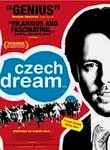
Czesky Sen (Czech Dream) | documentary 41 of 100

I found this great list of 18 cult documentaries you must see, which is how I discovered this deceptively simple Czech film.

Synopsis: Two Czech film students convince an ad agency to help them pull a huge hoax: opening a fake “hypermarket.” Not only do they successfully fool the public into believing that a huge new “hypermarket” is about to open, causing hundreds of people to wait in line on the “opening” day – they also managed to fool me into expecting more of a dramatic climax than actually happened (by faking footage used in the trailer). As a viewer, you end up feeling a little bit betrayed, like the people who attended the grand opening must have felt. And aren’t films supposed to be about making you feel things? It’s infuriatingly brilliant on more than one level.

Story and Structure: Straightforward chronology. I’m envious of filmmakers who choose to make films with this obvious of a structure – it makes their job so simple. It’s a film about an event – and the obvious thing to do is begin with the idea, and how the idea is developed, building up to the event itself – the climax – and tie up a couple loose ends before rolling credits. Done.

One thing worth noting: They did NOT opt to begin the film at the obvious place: the end. I might have opened with the crowd rushing toward the fake building and then flash back to how the plan was hatched.

Cinematography: There are more glidecam shots in this film than any doc I’ve ever seen. The camera is fairly flying – in and out of crowds, circling around people multiple times, enough to make you dizzy in the hands of a less skilled operator, but this guy was ON IT. The technique called attention to itself, but that was part of the story – the idea that slick production values can sell anything. The quality of the cinematography certainly rose above that of what I’d expect from a couple of film school students. You see the one kid filmming everything with a handheld camcorder, but I didn’t see any footage in the film that looked like it had been filmed on a crappy handheld camera, so that apparently was just a prop.

Editing: The story manages to move along, despite taking a long time with arguments among members of the team who developed the marketing campaign, lots of time spent with focus group participants, etc. It appeared there must have been a ton of footage, because we get many many camera angles during the event day. They must have had a dozen camera people operating to get the coverage they got.

Sound and Music: The most memorable music was the crowd singing prior to the opening of the fake store – that was precious. Otherwise, audio was good – lots of boom poles visible in the film as they filmmakers made no effort to hide the fact that this was a film being made.

Heading to Vancouver for Larry Jordan Final Cut workshop

I’m heading to Vancouver next week on March 9 for a Final Cut editing workshop presented by Larry Jordan. The seminar cost is $99. Any Seattle filmmaker want to carpool with me? I’ll be leaving at about 6am and plan to return to Seattle the same evening by around 8pm.

I pretty much learned how to edit from this guy’s video tutorials, both those posted on his own site and via the outstanding Lynda.com resource.

This particular workshop is sponsored by Red Giant, makers of outstanding Final Cut plugins, and I’m looking forward to learning in more detail how to use their stuff in my own projects. Also a big reason for attending: Jordan will be showing tips on how to use Sonicfire, a scoring app. I’ve used it on one project and loved it, so I’m looking forward to learning more about how to integrate it with my Final Cut workflow.

Why the Canon 550d/T2i will be my first documentary filmmaking DSLR

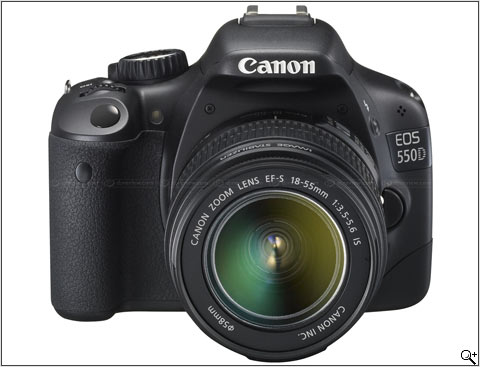
Big news from Canon earlier this week: They announced a new DSLR that is a bold step forward where it matters to me most: price. I’d been holding off on taking the plunge into DSLR filmmaking, because the field is moving so rapidly and I didn’t want to plunk down a couple thousand bucks on something that would be outdated in a few months. But at a retail price of just $800, Canon just removed that concern with the Canon 550d/T2i.

This new camera, which is rumored to begin shipping any day, features virtually the same video capabilities as the 7d, complete with selectable cinema framerates and a fat APS-C sensor. The result, when paired with good lenses, is dreamy shallow depth of field in a handheld camera.

Another big factor for me: This camera uses SD cards! This might not seem like a big deal, but I absolutely HATE having to plunk down the big bucks for different types of media. I already have invested in 3 SD cards that I use in my JVC HM-100, and absolutely LOVE them: they’re tiny, and hold nearly an hour of 1080p HD video per 16gb card. Sweet.

This camera allows me to join what I expect will be legions of videographers who want to take the visual quality of their work to a whole ‘nother level – without breaking the bank. This camera will allow me to put my money where it belongs – on buying great lenses.

This camera doesn’t address the issues that have kept me out of the dslr filmmaker fold previously – it still is a 35mm stills camera with video bolted on. No articulating screen, no good audio features, etc. But at this price, it doesn’t matter. A camera will come along before too long that will fix that, and let me use the glass that I’ll begin buying. I already have two very fast 35mm Nikon lenses that, with a $10 adapter I bought on Ebay, will work fantastically on this new Canon. Thanks Canon for making a game-changing product that allows me to join the DSLR filmmaking revolution.

"Brothels" baby grows up to become filmmaker

One of the child characters in Ross Kaufmann and Zana Briski’s 2004 documentary, Born Into Brothels, is now attending film school in the United States. A fund set up by the filmmakers to help the children of prostitutes, who were the subject of their Oscar-winning film, enabled 20-year-old Avijit Halder to follow his educational dreams to the United States. He plans to return to India and make a film about one of the other children who was in the film, a girl who has since become a prostitute.

Gates of Heaven | documentary 30 of 100

After watching Gates of Heaven, I can understand why Errol Morris found the theater completely empty at the end of it’s first screening at the Berlin Film Festival. I’m also beginning to recognize the subtle thing that makes a filmmaker potentially great. It’s visible in this film. Roger Ebert saw it, and put this film on his top 10 list of best films of 1978. Here’s my stab at describing it: it’s not necessarily a filmmaker’s ability to record great on-screen action, exotic locations, or big budgets. It’s his ability or need to transcend the subject at hand and turn it into an exploration of deeper questions. In this case, it’s about success and failure, and life and death.

Synopsis: When a poorly run pet cemetery closes and 450 animals have to be dug up and moved to a more successful cemetery, first-time filmmaker Errol Morris introduces us to the failed owners and the successful owners in a series of interviews that raise questions about business, death, and the banality of existence.

Story Structure: In a fascinating preview of his later style, Morris structures the entire film around interviews in which the characters at times directly address the camera, but most often look close beside the camera in telling their stories. The film is roughly in two halves; the first half deals with the failed cemetery owners telling their story, and the second introduces us to the successful cemetery owners and their stories. The interviews slowly reveal character. Morris’ voice is not present, as it is in later films. The film gets really interesting toward the end as the Bubbling Springs cemetery owner talks about God and we realize that the religion he created for the pet owners convenience is really no different from the religions of the rest of the world.

Cinematography: The interviews are all different, but they are set up to say something about the person. For example, filming the oldest son with all of his trophies on the wall, or the dad with a name plaque on his desk, or the owners of the failed cemetery with an open can of Coors. Simple backgrounds work wonderfully – cactus behind pet owners, dry grass behind pet owners, and nothing else.

Intriguingly, the film is almost entirely interview, and it works (but that’s likely why most people walk out on it – it’s a bit tedious to sit through a feature that’s mostly interviews for many people). There is light by highly effective use of b-roll to illustrate the story: for example, there’s a couple of newspaper headlines illuminated by light falling just on the headlines, the rest of the page in shadow. There are shots of the cemetery location, and of workmen digging out the bodies of pets. There’s a shot of a guy drawing what he’s talking about on a pad of paper.

Editing: Morris is credited as the editor, producer and director of this film. I read somewhere that he consulted with a ton of editors who didn’t think they could make a film out of the footage, so perhaps he had no one except himself to edit it! One moment in the film feels really tacky, when Morris inserts a newspaper headline by doing the old-school spinning-spinning-spinning paper which suddenly stops and we see the headline. It was almost like, hey, I figured out how to do this technique so here it is. Kind of like I was doing on Final Cut yesterday.

Music and Sound: No music in the film except two memorable scenes in which the youngest son of the pet cemetery plays music he’s recorded on a tape recorder, and the second scene where he hooks up his guitar and blasts it out over the cemetery. There are a number of airplanes heard droning overhead while someone’s talking in an interview, car noises from busy streets during interviews, people talking a bit in background. But it manages to work.

As an interesting aside, this is the film that Werner Herzog famously ate his shoe over. Apparently, he had observed that Morris had an inability to complete projects that he started. Morris proved him wrong by completing this film. And a few others since then.
Land of Silence and Darkness | documentary 29 of 100

What intrigues me about this 1971 film by Werner Herzog is how straight-up it’s shot, narrated and structured. In Land of Silence and Darkness, it’s almost like he wasn’t sure what to say about the subject, so he let her speak for herself. So to speak. And she has plenty to say, even though she’s deaf and blind. At the time this film was made, people with disabilities had not yet received the kind of attention that would improve their living conditions in later decades. This film probably played a role in helping bring awareness to the issue, but in the end it is a compassionate examination more than a rallying call to action.

Synopsis: What’s it like to be deaf and blind? Meet Fini Straubinger, a German version of Helen Keller, who somehow maintains a strong connection connection to people around her and a genuine interest in helping others locked in a prison of darkness and silence. She’s able to speak better than most, because she didn’t lose her vision or or hearing until she was a teen. The film features lengthy sequences of others who are less fortunate than her, in various stages of development. In the end the film is less a story with a beginning, middle and end, and more an investigation into the nature of being, and a metaphor, perhaps, for humankind’s struggle to grapple with the big existential questions.

Story Structure: The film (in German with subtitles) is structured around the story of Straubinger, and she tells the story herself in an interview setting. The first part of the film is mostly blackness with only her voice retelling what she remembers of seeing, and when she describes something particiularly vivid (such as clouds or ski jumper) we see momentary clips of these things. Great way to get into the film. The opening sequence ends with Straubinger sitting on a bench with her interpreter who is asking her questions for Herzog by spelling the questions into her hand.

Narration when used is NOT Herzog’s voice (he had someone else do it),  and it merely elucidates facts, rather than offering comment or reflection, as his later more personal films do. We spend a lot of time in the film with other characters, simply observing what their lives are like: a birthday party, taking a swim, a visit to a cactus garden in which all the blind eagerly touch the sharp cacti as if stroking a pet. One uplifting scene early in film is when Herzog arranges for two of the blind ladies to take their first airplane ride.

Cinematography: Even this early in his career, Herzog did not shoot his own films. The cinematographer on this film was a frequent collaborator with Herzog, Jorge Schmidt-Reitwein.

Editing: Lots of very long sequences without cuts of any kind. Most everything else simply cuts. Family photos are simply displayed in frame, with arrows showing who she is, with no movement of any kind within them.

Sound and Music: Orchestral, classic music. Haunting violin and strings. Some of the audio recording isn’t that great, suggesting low budget film made by a couple people.

Fast, Cheap and Out of Control | documentary 24 of 100

New York-based documentary film editor Karen Schmeer was tragically killed this weekend by a hit and run driver. In honor of the Academy Award-winning editor, a frequent collaborator with Errol Morris, I’m going to screen her recent films, beginning with the 1997 documentary Fast Cheap and Out of Control. IndieWire blogger Matt Dentler calls that film “one of the best jobs of editing a documentary, I’ve ever seen.” Hmmm. Here’s how I see it…

Synopsis: What happens when Error Morris puts a mole-rat specialist, a topiary gardener, a lion-tamer, and an MIT robot scientist under the lights of his Interrotron? You get a mashup called Fast, Cheap and Out of Control. You get to try and make sense of deep philosophical statements like “You’re either prey, an enemy, or ignored,” never sure whether this is a joke, reality, academia, or the circus. Mostly, it’s the latter.

Story Structure: It’s difficult to say that this film actually has a structure, but I think it’s in there somewhere. Let me try to make sense of it: you’ve got four main characters, who are the rocks of the film to which the barnacles of story cling. Desperately.

Cinematography: There are a lot of solid individual shots in this film. For example, the Hollywood lighting on the giraffe topiary, complete with smoke machine and fake rain at night. Ohhhhhhhh. Ok so that’s pretty. Pretty chaotic. Cut to the middle of a B&W chase scene from a 1950s sci-fi film in which the preying mantis is about to own your ass. Lots of slow-motion, color suddenly changing to black and white, camera angles titled diagonally, as if to scream: the world is not as it appears. YOU’RE DREAMING. Or Crazy. Or the filmmakers know a LOT more about what they’re doing than you do. Or something like that.

Editing: There’s no doubt that this film was a bitch to edit. If I can’t make sense of it as a viewer, imagine how the editor must have felt having to try and make sense of it? But the reality is: it’s a watchable film. It’s just difficult if you try to understand it. So don’t. I really liked the occasional flashbulb transition. Those were really cool looking.

Sound and Music: The music works. I found myself wondering whether it was composed AFTER the editing, or BEFORE. The music was composed specifically for the film, according to the credit roll, so maybe it was a collaboration. Music is a very big part of this film, providing a pulse for the journey. There are moments, such as when animated characters appear onscreen, that appear almost Disney-like with the matching of music to character’s tumbles.

Kevin Kelly's True Films

Kevin Kelly is one of those truly visionary people whose work helped guide me when I was setting up Biznik. But I had no idea he was a fan of documentary film until I accidentally stumbled upon his site, True Films, while researching Werner Herzog. Here’s what Kelly has to say about documentary:

This is the golden age of documentaries. Inexpensive equipment, new methods of distribution, and a very eager audience have all launched a renaissance in non-fiction film making and viewing. The very best of these true films are as entertaining as the best Hollywood blockbusters. Because they are true, their storylines seem fresh with authentic plot twists, real characters, and truth stranger than fiction.